Advances in technology are transforming orthopaedic surgery, and one of the most talked-about developments is the use of robotics in joint replacement.
But what does “robotic surgery” actually mean for patients?
What is robotic-assisted surgery?
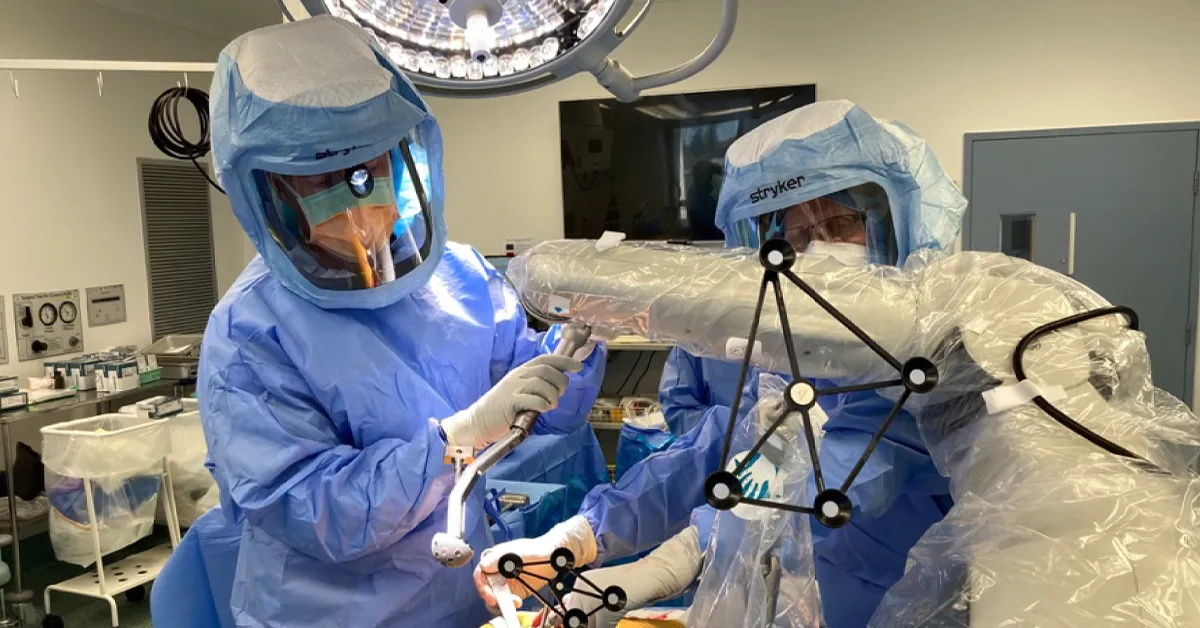
Robotic systems do not replace the surgeon. Instead, they enhance precision by providing real-time data and guidance during the procedure.
The surgeon remains fully in control at all times.
How does it work?
Before surgery, imaging (such as CT scans) is used to create a 3D model of the joint. During the operation, the robotic system helps guide bone preparation and implant positioning with a high degree of accuracy.
Why does precision matter?
Small differences in implant positioning can affect:
- Joint function
- Implant longevity
- Risk of complications
Robotic systems help achieve consistent, reproducible alignment.
Does it improve recovery?
Some studies suggest:
- Less soft tissue damage
- Improved early function
- Potentially faster recovery
However, outcomes still depend heavily on surgical expertise and patient factors.
Who is suitable?
Robotic-assisted surgery may be particularly beneficial for:
- Patients with complex anatomy
- Those requiring precise alignment correction
- Revision cases
Limitations and considerations
- Not all centres offer robotic systems
- It may increase operative time in some cases
- Long-term data is still evolving
Conclusion
Robotic-assisted joint replacement represents a significant step forward in surgical precision. While it is not a guarantee of better outcomes, it is a valuable tool that can enhance the accuracy and consistency of modern orthopaedic procedures.
If you would like expert advice on treatment options, please get in touch with my clinic.